Blog
Window to the Nano World




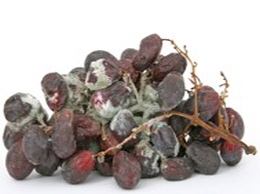
Mold is a microorganism formed when airborne spores grow under suitable temperature and humidity conditions. It commonly proliferates on sugar-rich organic materials such as grapes, bread, and fruits. Although mold may appear cotton-like to the naked eye, microscopic observation reveals a complex network of intertwined hyphae that enables efficient nutrient absorption and rapid growth.
While mold is often associated with spoilage, certain species are widely used in the production of antibiotics, cheese, and fermented foods. Observing these fine hyphal and spore structures with SEM provides valuable insight into the morphology and ecology of microorganisms.
The study of mold microstructures is important for understanding spore formation, hyphal growth, and surface adhesion characteristics. Since these features exist at the micrometer and sub-micrometer scale, high-resolution SEM imaging is essential.
COXEM’s EM-40 tabletop SEM provides an effective solution for biological and microbial analysis. Equipped with SE and BSE detectors as well as optional EDS functionality, the EM-40 enables both morphological and elemental analysis of mold samples. In addition, Low Vacuum mode allows stable observation of non-conductive biological specimens without conductive coating.
These capabilities make the EM-40 ideal for research in food science, biotechnology, contamination analysis, antimicrobial materials, and microbial growth studies.

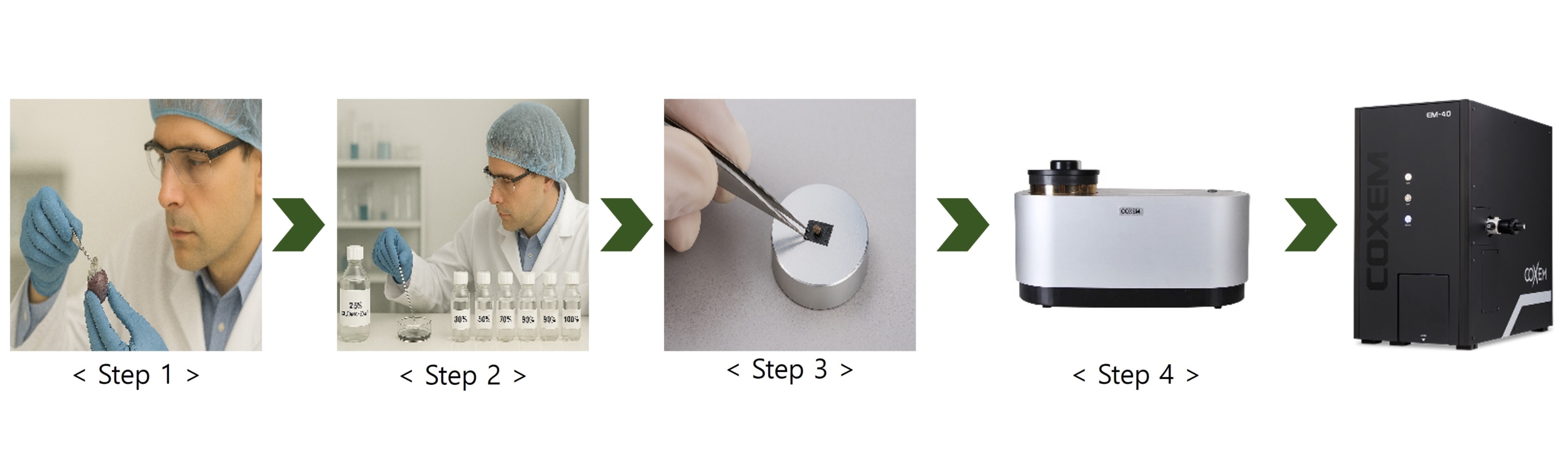
Proper sample preparation is essential for SEM observation of mold while preserving delicate surface microstructures and preventing deformation of cellular features. The samples are first fixed in 2.5% glutaraldehyde to stabilize intracellular protein structures, followed by gradual dehydration using increasing ethanol concentrations (30 → 50 → 70 → 90 → 100%) to minimize shrinkage caused by moisture removal.
After dehydration, the samples are dried using HMDS replacement or freeze-drying to preserve the hyphal morphology. The prepared specimens are then mounted onto SEM stubs and coated with Pt or Au using ion sputter coating to improve conductivity.
To avoid structural collapse, excessive washing or prolonged dehydration should be avoided. In addition, coating before complete drying may cause surface shrinkage or cracking.
Step 1. Collect mold samples from the grape surface.
Step 2. Perform sequential chemical pretreatment using the prepared solutions.
Step 3. Mount the stabilized mold sample onto the SEM stub.
Step 4. Apply Au sputter coating using the SPT-20 to ensure surface conductivity.
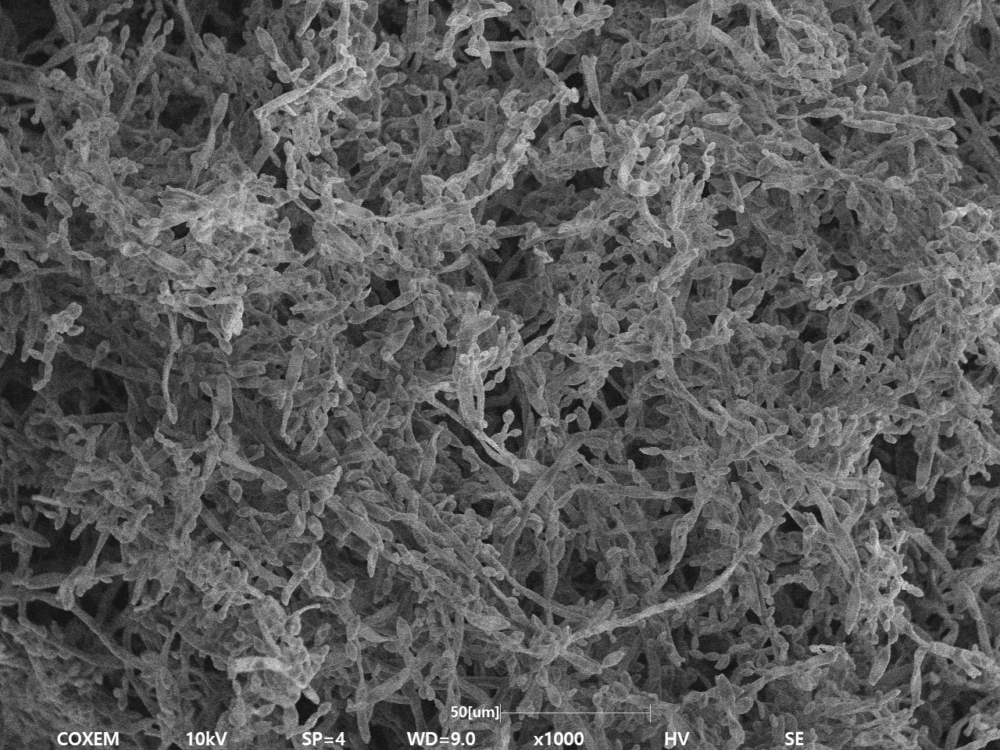
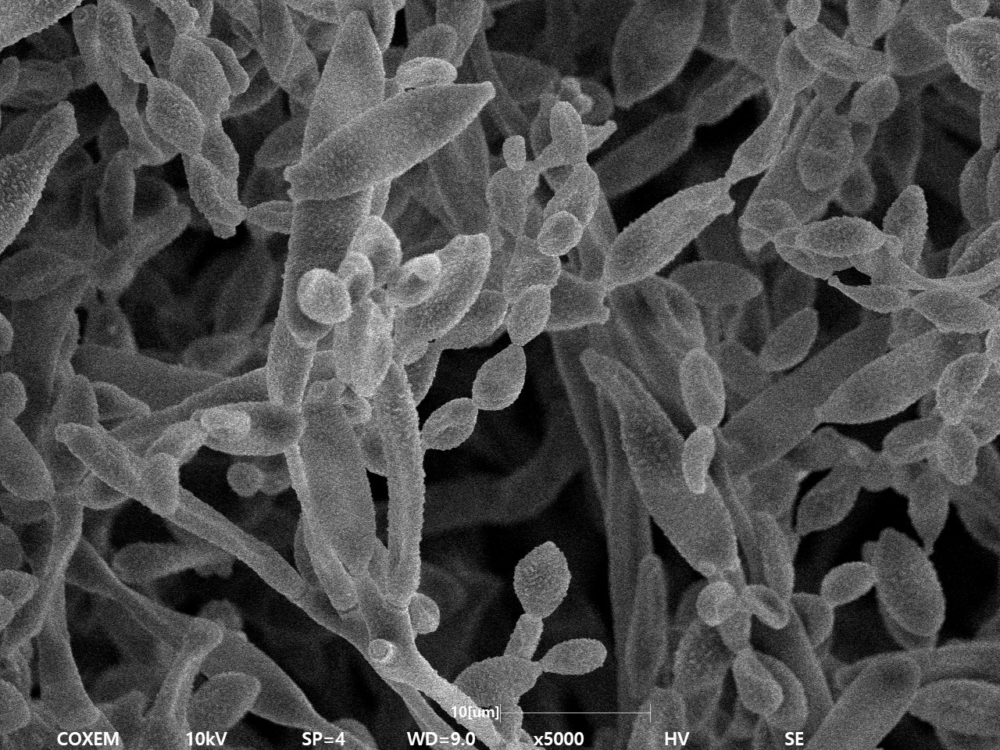
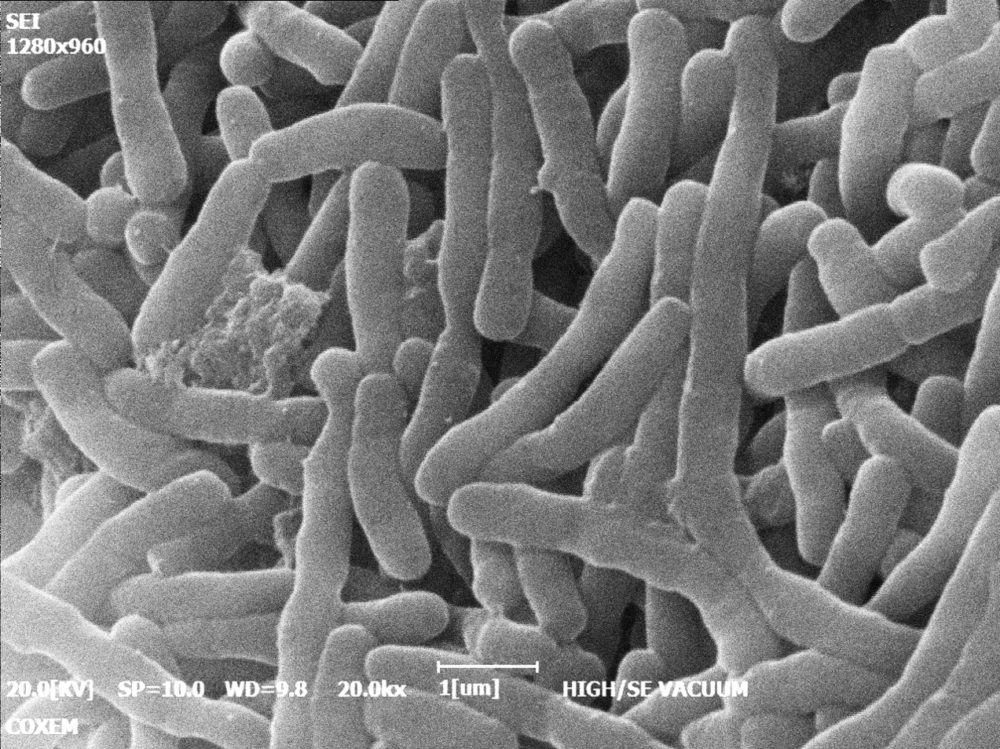
The analysis was performed using the COXEM EM-40 with an accelerating voltage of 10 kV and a working distance of 9 mm using the SE detector. The SEM images clearly revealed dense hyphal growth following the fine surface texture of the grape skin.
This analysis provides valuable insight for applications such as microbial contamination assessment during food storage and the development of antimicrobial coating materials across the food and bio industries.
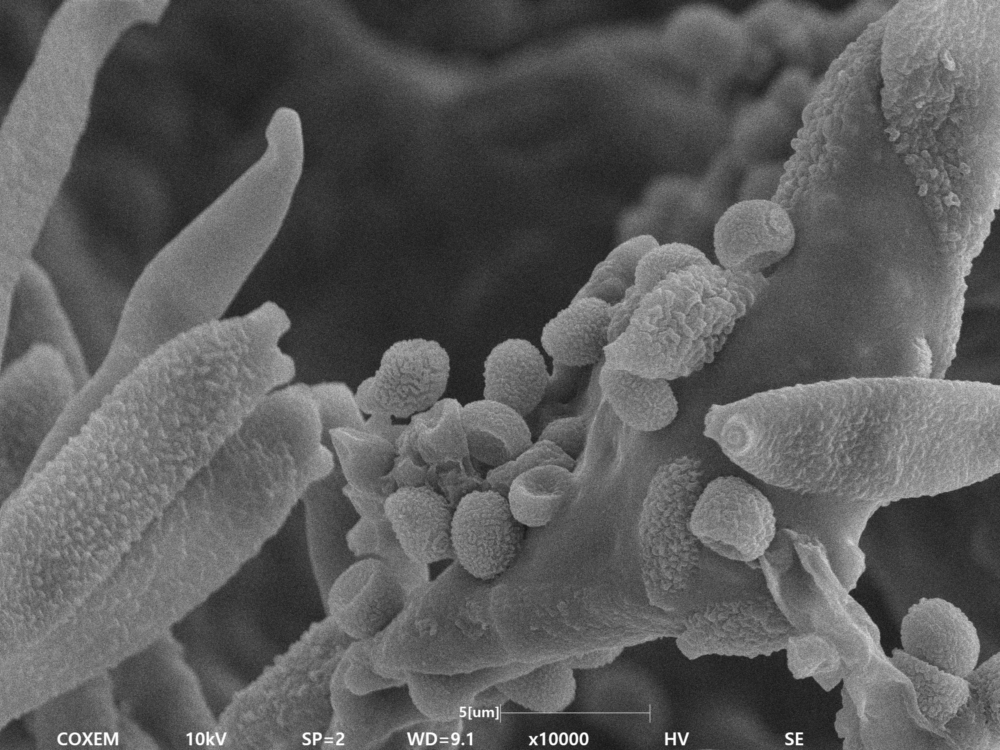
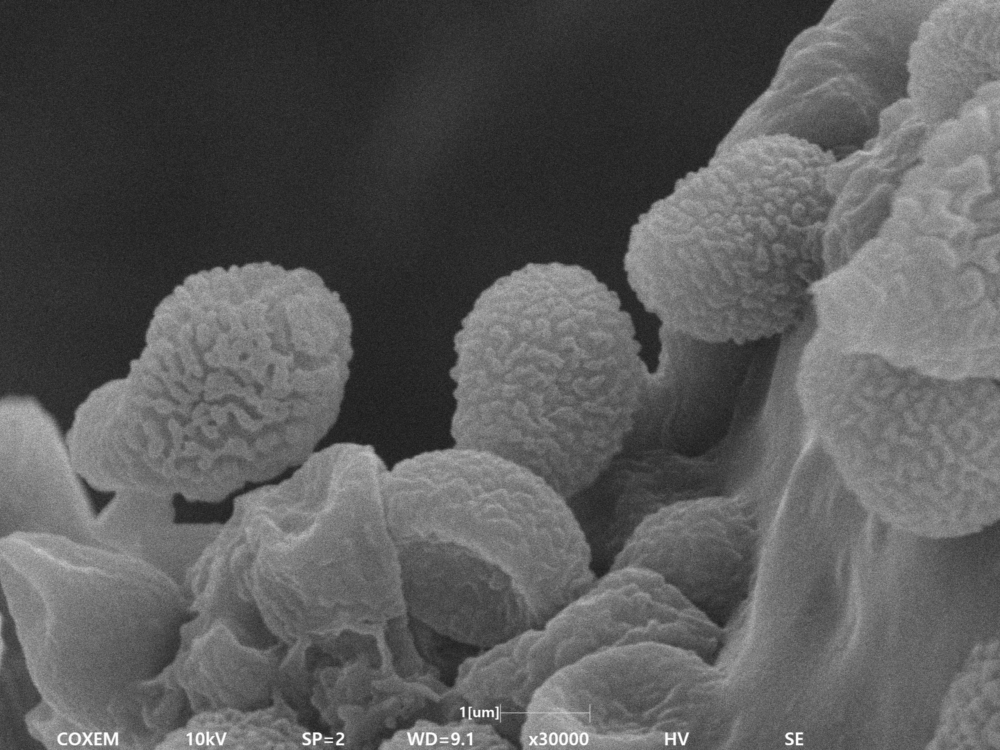
Using the COXEM EM-40 scanning electron microscope, mold formed on the surface of a grape was observed in detail. The sample was fixed with 2.5% glutaraldehyde, dehydrated through a graded ethanol series, dried using HMDS replacement, and coated with Pt by ion sputtering.
SEM analysis was performed at an accelerating voltage of 10 kV, a working distance of 9.1 mm, and magnifications ranging from 10,000× to 30,000× using the SE detector. The images clearly revealed densely grown fungal spores and hyphal structures distributed across the grape surface.
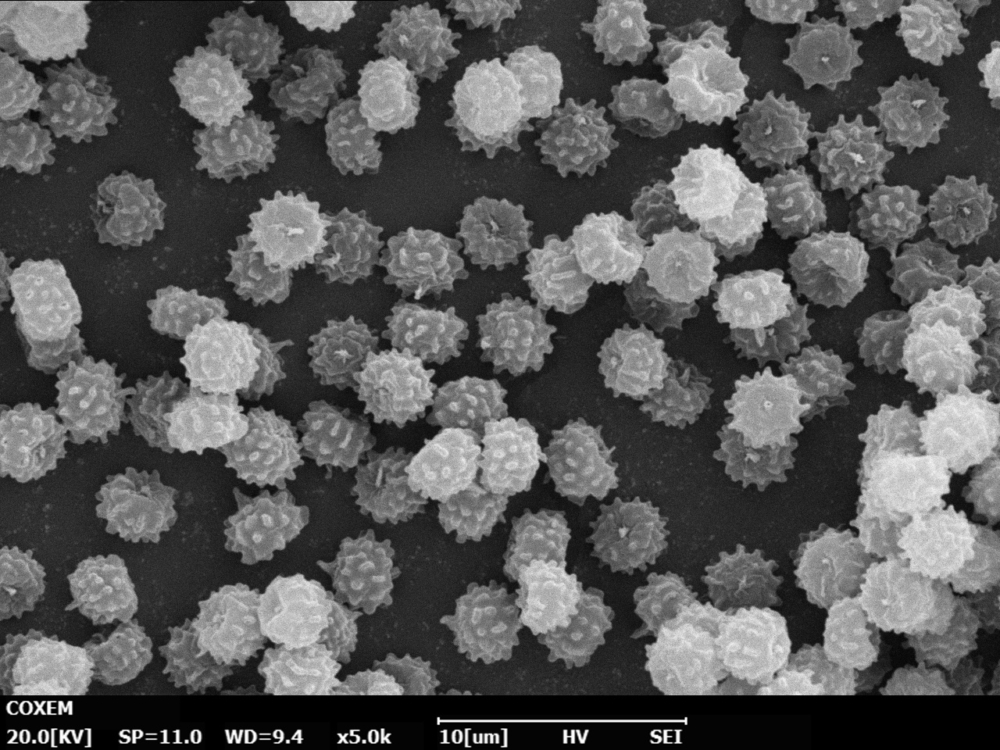
[Pathogens]
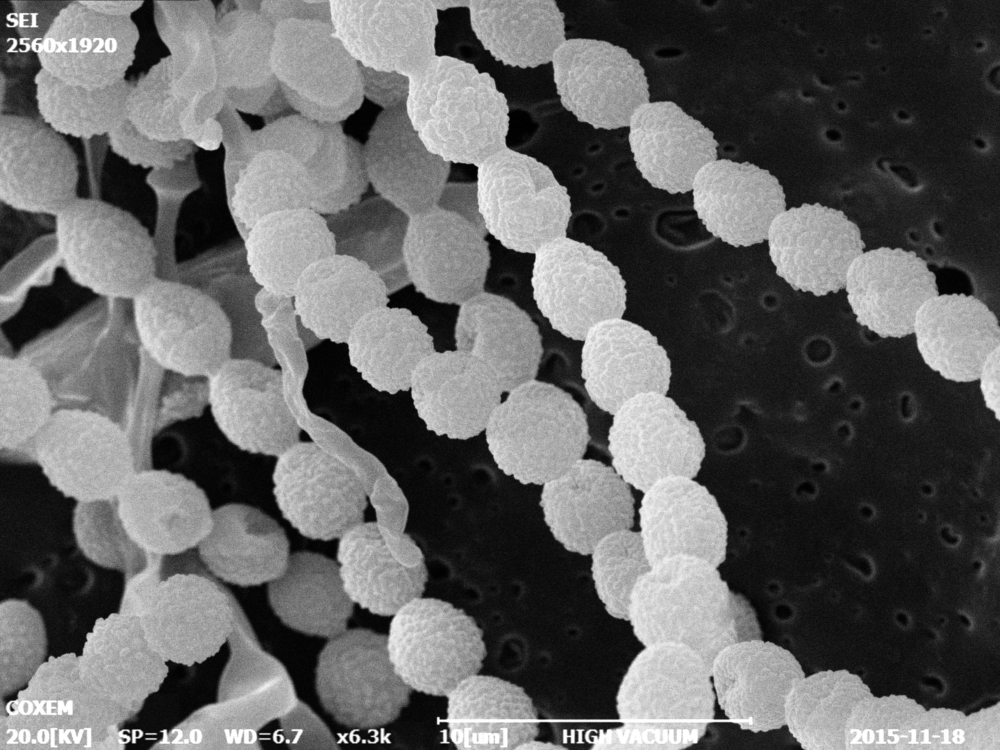
[Fungi]
[Bacteria]
#Fungi #Bacteria #SEM #EM-40 #Ionsputtercoater #SPT-20

 Cherry Blossom