Blog
Window to the Nano World



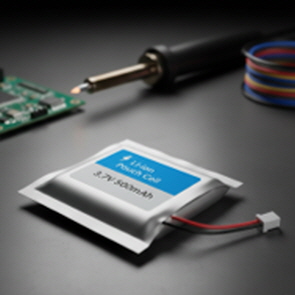
Batteries convert chemical energy into electrical energy through electrochemical reactions. A typical battery consists of a cathode, an anode, an electrolyte, and a separator layer. During operation, electrons released from the anode travel through an external circuit to the cathode, generating electrical current.
Because the properties of electrode materials and electrolytes directly determine battery performance, researchers continuously develop advanced materials capable of storing and delivering higher energy with improved stability. In many cases, battery degradation and performance loss originate from microscopic structural changes, making electron microscopy an essential analytical tool for understanding and improving battery materials at the nanoscale.
Battery materials such as lithium metal and sulfide-based solid electrolytes are highly sensitive to air exposure and can rapidly react with oxygen or moisture, causing structural damage and surface alteration. To preserve the original material state, samples must remain protected from atmospheric exposure throughout preparation and SEM analysis.
COXEM’s CX Series SEM equipped with the Air-Protection option provides a reliable solution for observing air-sensitive battery materials without atmospheric damage, making it highly suitable for advanced battery research and failure analysis.

For SEM observation of battery materials, all sample preparation steps should be performed inside a glove box to prevent exposure to oxygen and moisture. The glove box environment is typically filled with argon or nitrogen gas, maintaining oxygen and moisture levels below the ppm range.
When transferring the sample from the glove box to the SEM, the CX Air-Protection holder enables stable observation without atmospheric exposure, preserving the original condition of air-sensitive battery materials.
Step 1. Prepare the battery sample for SEM analysis.
Step 2. Place the Air-Protection holder inside the glove box and securely mount the sample into the holder.
Step 3. Seal the holder by closing the lid, then remove it from the glove box.
Step 4. Load the holder into the SEM chamber and evacuate the chamber to vacuum conditions.
Step 5. Once high vacuum is reached, open the holder lid using the external knob mechanism and observe the sample.
Step 6. After observation, close the holder lid first to maintain the protected environment inside the holder before venting the SEM chamber.


[Cathode Powder]

[Cross Section of Anode Powder]
Battery cathode and anode powders were observed using SEM. The active material particles and binder structures were clearly visualized without noticeable damage, showing densely packed powder morphology.
Cross sections prepared by ion milling also revealed internal particle structures and fine pores in detail. For air-sensitive materials, the Air-Protection option is highly recommended to prevent oxidation-induced structural changes and to preserve sensitive lithium-containing layers in their original state during SEM observation.


NCM powder was mounted onto the sample holder using carbon tape, followed by elemental mapping analysis to evaluate the distribution of detected elements.
Nickel, cobalt, and manganese were clearly detected from the powder particles, while small amounts of carbon and aluminum were identified from the background region, originating from the carbon tape and sample holder material.
 Biological Sample Analysis Guide