Blog
Window to the Nano World




Since the 20th century, plastic and petroleum-based products have greatly improved convenience in daily life. Lightweight and inexpensive disposable products became deeply integrated into modern society, but they also contributed to serious environmental problems. In response, eco-friendly industries have rapidly grown around resource circulation, carbon reduction, and biodegradable material development.
One representative example is biodegradable drinking straws designed to replace conventional plastic straws. While plastic straws may take hundreds of years to decompose, alternatives such as paper straws, PLA straws made from corn starch, and sugarcane fiber straws have been developed to reduce environmental impact. These materials can decompose more rapidly under natural conditions or be recycled through composting processes.
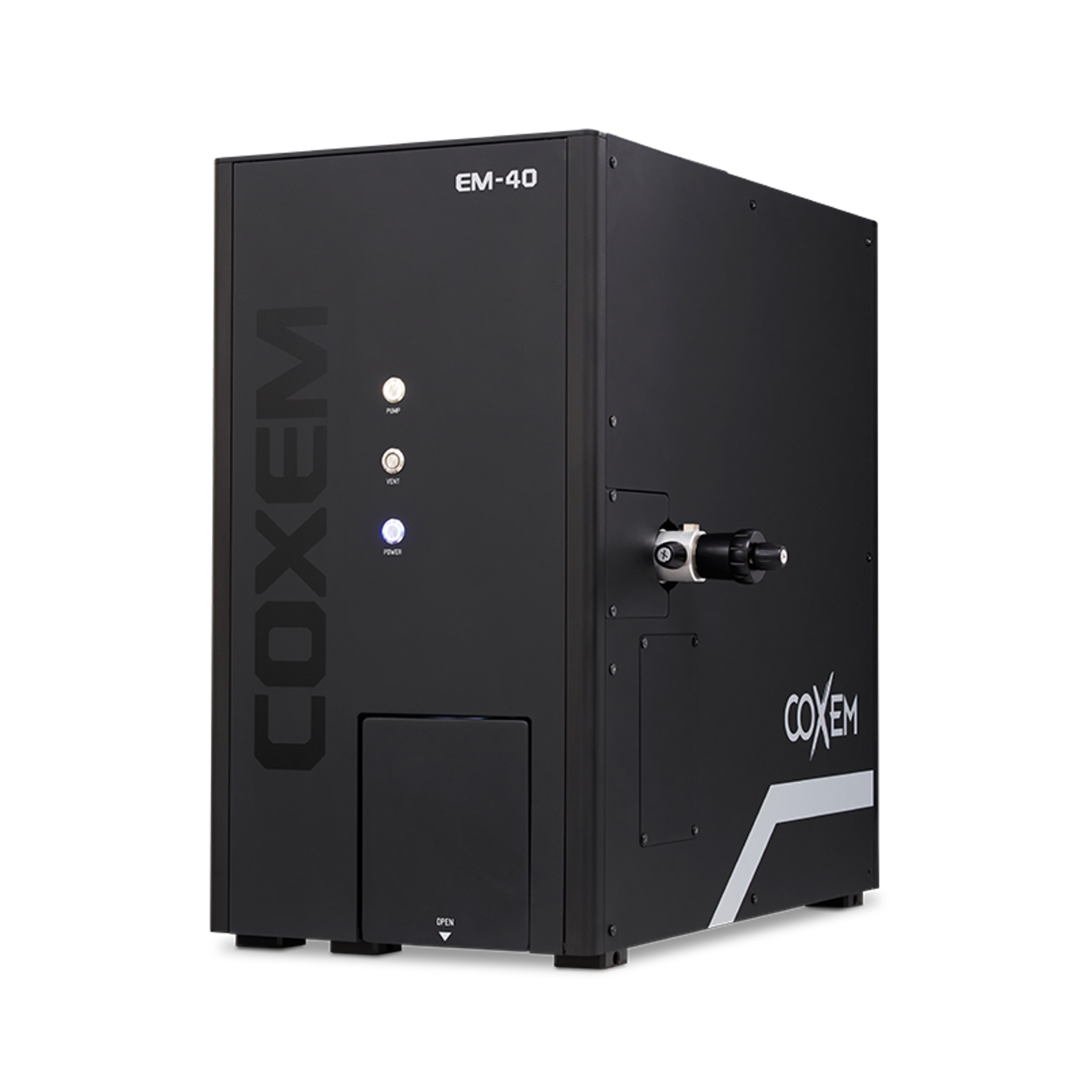
At first glance, paper and PLA straws may appear similar to conventional plastic straws. However, their fundamental material differences become much clearer when observed at the microscopic level. To analyze these structural differences, COXEM’s EM-40 tabletop SEM was used to observe surface microstructures down to the nanometer scale.
The EM-40 is optimized for fast and convenient analysis of multiple samples and supports magnifications up to 250,000×. In addition, compact EDS integration enables both high-resolution structural imaging and elemental composition analysis.
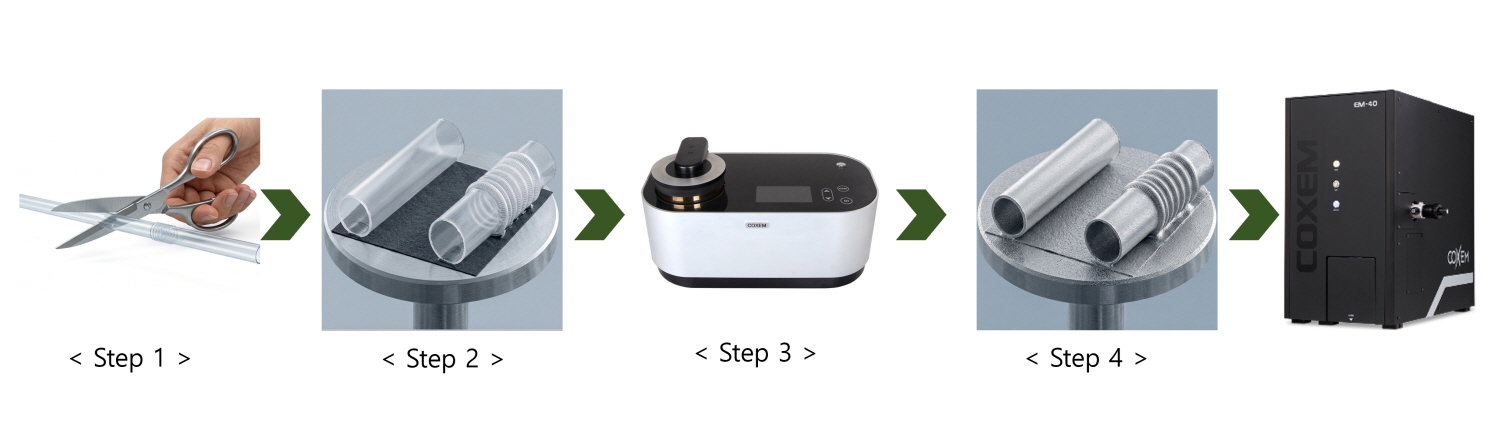
Straws made of plastic, paper, or biodegradable materials are generally non-conductive, meaning electrons cannot easily dissipate from the surface during SEM observation. To prevent charging effects and obtain stable SEM images, the sample surface should be coated with a thin conductive metal layer.
Step 1. Cut the straw sample to fit the SEM holder size.
Step 2. Mount the sample onto the holder using conductive materials such as carbon tape or silver paste.
Step 3. Place the mounted sample into the SPT-20 sputter coater and apply Pt or Au coating.
Step 4. After coating, load the sample into the EM-40, evacuate the chamber, and observe the surface structure.
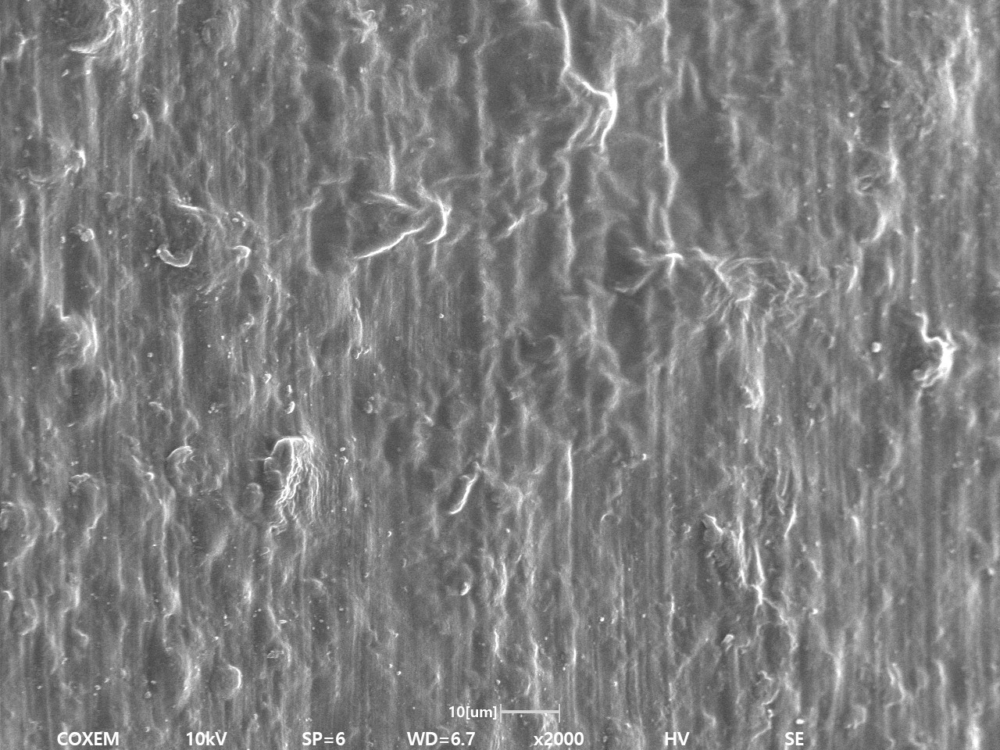
[Eco-friendly Straw]
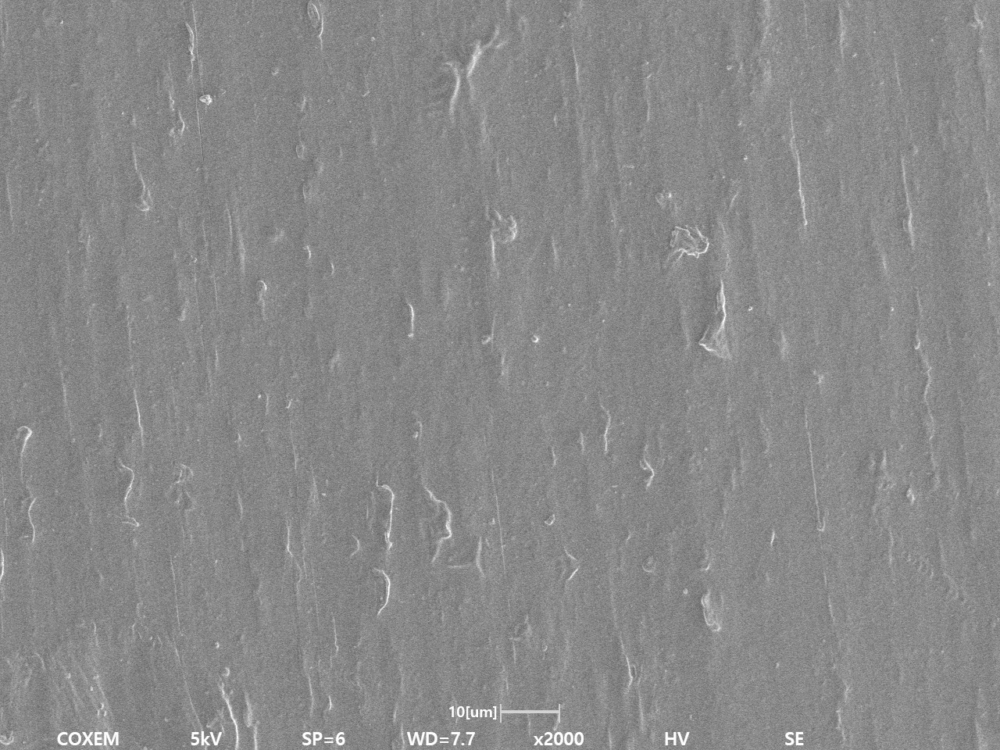
[Plastic Straw]
Eco-friendly straws and conventional plastic straws were observed using SEM. The plastic straw showed a relatively smooth surface because petroleum-based polymers are melted and extruded through smooth molds during manufacturing.
In contrast, the eco-friendly straw displayed a rough and irregular surface structure due to its plant-derived fibrous composition. The intertwined fiber network created noticeable surface textures and grooves. These surface features can increase the area available for microorganisms and enzymes to attach, helping accelerate the biodegradation process.
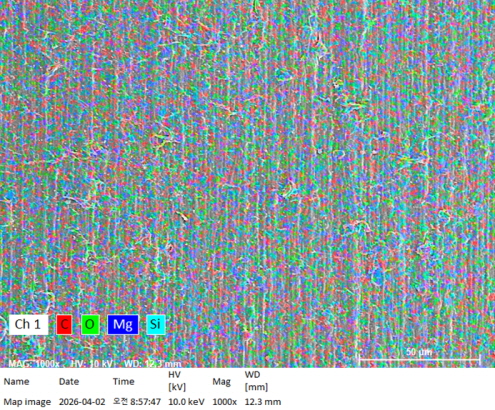
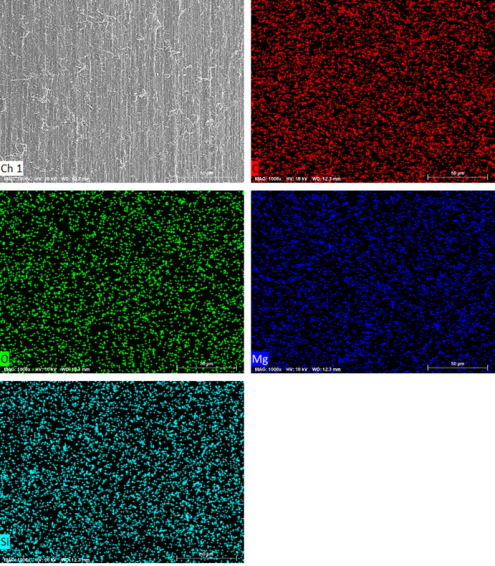
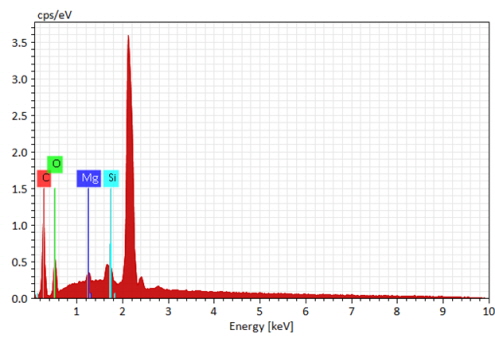

The eco-friendly straw was mounted onto the sample holder using carbon tape, followed by elemental mapping analysis to evaluate the distribution of detected elements.
Carbon, oxygen, silicon, and magnesium were detected from the surface of the straw.

 Revealing Invisible Circuits: Semiconductor Analysis with SEM